

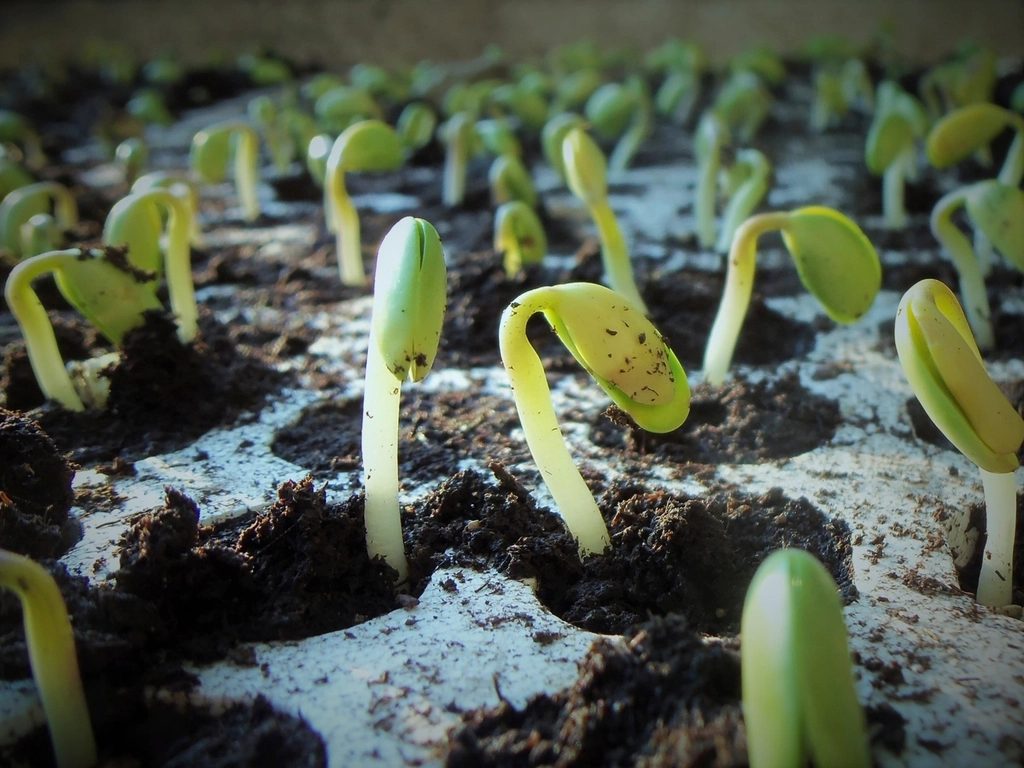
Quick answer: To get seeds to sprout, use fresh seed (test old packs on a damp paper towel first), sow at 2-3 times the seed's width, keep the mix evenly damp like a wrung-out sponge, match soil temperature to the crop, and wait the full time on the pack. Light-needing seeds such as lettuce and petunia stay on the surface. Most failures trace back to old seed, waterlogging, wrong temperature or burying fine seed.
Key takeaways
- Seeds age. Purdue lists onion and parsnip at about 1 year of reliable life, tomato at 4 and cucumber at 5, and storage matters about as much as the species.
- A paper-towel test with 10 seeds tells you the germination percentage. Wisconsin says replace seed below 40%; Illinois says sow thicker at 70-90%.
- The depth rule is 2-3 times the seed's diameter, but light-needing seeds like lettuce and petunia are sown on the surface.
- There is no single best temperature. Spinach and lettuce prefer about 16-24°C while okra prefers 29-35°C.
- Waterlogging is as deadly as dryness. Damping-off thrives in wet soil and cannot be cured, only prevented.
What a seed needs to germinate
A seed is a living embryo with a packed lunch of stored food. It wakes up when three things arrive together: water, air and a suitable temperature. A few species also need light. Once a seed takes up water, the process cannot pause, so a seed that starts to swell and then dries out usually dies. That is why steady moisture from sowing to sprouting matters more than any other single habit.
The five secrets below follow the order in which things go wrong: seed quality, depth, moisture, temperature and air, then patience.
Secret 1: Start with living seed
Nothing you do later can rescue dead seed. Seed life depends on the crop and how it was stored. Purdue Extension lists onion and parsnip at about 1 year under good storage, tomato at about 4 years and cucumber at about 5, and notes that storage conditions affect germination about as much as the species does. In the warm, humid Indian climate, keep leftover seed sealed in a cool, dry, dark place. Wisconsin Extension gives about 40°F (4°C), a fridge, as its storage temperature.
The paper-towel (seed roll) test, step by step
- Dampen half a paper towel until it is very moist but not dripping.
- Place 10 seeds along one edge and roll the towel loosely.
- Put the roll in a bag, sealed about 70% so a little air gets in. A sealed bag invites mould.
- Label it with the date, the crop and the days to sprout on the pack. Keep it warm.
- Check every 2-3 days so the towel does not dry out.
- At the end of the germination period on the pack, count the sprouts. Sprouted seeds divided by 10, times 100, is the percentage.
The method comes from Wisconsin Extension. What to do with the result is where sources differ:
| Result of 10 seeds | Wisconsin Extension | Illinois Extension |
|---|---|---|
| 8 or more sprout (80%+) | Strong result | Fine; sow thicker only if 90% or lower |
| 7 sprout (70%) | Usable | At the edge: sow a little thicker |
| 5 sprout (50%) | Still plantable, sow more seed than usual | Under 70%: consider buying new seed |
| Under 4 sprout (under 40%) | Buy fresh seed; weak seed can be stunted | Buy new seed |
A practical rule: at 80% or more sow as normal, at 50-79% sow thicker and thin later, and below 40-50% buy fresh seed. See the Illinois guide for its wording. Seeds from My Mali are lab-tested with the verified rate printed on the pack, and the Germination Promise replaces a pack that does not sprout.
Secret 2: Sow at the right depth
Depth works in both directions. Too deep and the seedling runs out of energy before it reaches light. Too shallow and the seed dries out or never gets the contact with moisture it needs. UGA Cooperative Extension gives the rule of thumb: plant seeds 2-3 times their diameter, and read the packet because there are exceptions.
The My Mali packs follow that rule. Here is what the pack details say:
| Seed | Pack depth | Pack days to sprout |
|---|---|---|
| Tomato | 0.5 cm | 6-10 days |
| Green chilli | 0.5 cm | 7-14 days |
| Zinnia | 0.5 cm | 5-7 days |
| Tulsi | 0.5 cm | Keep the soil lightly moist |
| Dill | 0.5 cm | 10-14 days |
| Spinach | 1 cm | See pack |
| Methi | 1 cm | 4-7 days |
| Coriander | 1 cm | Slower than methi (see pack) |
Seeds that need light
Some tiny seeds need light to trigger germination and should be pressed onto the surface, not covered. Garden Betty's guide lists lettuce and petunia among them. Petunia seed is dust-fine; the petunia guide shows how to sow it. For other tiny flower and herb seeds, follow the pack, since sources disagree on the full list. Use a loose mix, not compacted soil, so the shoot has an easy path up; the seed-starting mix guide shows how to make one.
Secret 3: Keep moisture even, like a wrung-out sponge
Water softens the seed coat and starts the embryo growing, so the mix should stay evenly damp from sowing to sprouting. Think of a wrung-out sponge: moist, not dripping. Waterlogged mix is just as bad as dry mix, because roots and seeds need air. Wet, airless mix also feeds damping-off, the fungal collapse that topples healthy seedlings at the soil line. Utah State Extension says to avoid overwatering and to use a well-drained mix, because seedlings should not sit in water for days.
- Moisten the mix before you sow, so you are not flooding dry medium afterwards.
- Water from below when you can: stand the tray in a little water until the surface darkens, then drain it.
- Mist fine surface-sown seed gently. A heavy stream buries or washes it away.
- Make sure every tray or pot has drainage holes. The watering guide has the finger test for checking moisture.
- Use a fresh mix for seed starting. Old, tired mix carries disease, so see the guide to reusing potting soil before you reuse it.
Secret 4: Match temperature to the crop, and give air
Temperature is the accelerator pedal. Within a seed's comfort range, warmer soil means faster, more even sprouting; outside it, seeds sit for weeks or rot. The soil temperature counts, not the air reading. UGA says warm-season crops want soil of about 65°F (18°C) or more for the best germination. The UC Master Gardeners table shows how much the optimum differs by crop. Converted to °C by me:
| Crop | Minimum | Optimum | Maximum |
|---|---|---|---|
| Tomato | 10°C | 18-29°C | 35°C |
| Lettuce | 0°C | 16-24°C | 29°C |
| Spinach | 0°C | 18-24°C | 24°C |
| Okra | 16°C | 29-35°C | 41°C |
| Cucumber | 16°C | 18-35°C | 41°C |
The source is the UC Master Gardeners table, based on the California Master Gardener Handbook. Lettuce is the classic heat casualty. University of Florida IFAS describes thermodormancy, where lettuce and some other seeds fail to germinate at high temperature, with onset around 25°C in the literature. See the IFAS note. In a hot Indian September, sow lettuce in the cool of the evening in shade, or wait for October. The October sowing list has the cooler-month options.
Seeds also breathe. A light, airy mix beats heavy garden soil, which compacts and goes airless when wet. A clear lid or loose plastic holds humidity before sprouting, which helps; take it off the moment green shoots appear, because stagnant humid air breeds damping-off.
Secret 5: Wake the tough seeds, then be patient
Hard-coated seeds can be hurried along. Soaking in room-temperature water softens the coat, and scarification means nicking or lightly rubbing the coat so water can get in (do not damage the pale eye where the root emerges). Soak times vary by source, so treat them as a range and stop when seeds are plump, not mushy.
| Seed | Soak range reported (gardening publishers differ) | Note |
|---|---|---|
| Okra | 12-24 hours | Soaking can cut germination from two weeks or more to about a week |
| Peas and beans | Thin-skinned beans 2-4 hours; peas 8-12 or up to 24 hours | Do not leave them overnight if they are splitting |
| Nasturtium | 6 up to 24 hours | Scarify first if the coat is very hard, then soak |
| Anything | Sow within 12-24 hours of soaking | Seeds that drown or ferment will not recover |
The ranges come from a gardening publisher, Epic Gardening, so open it for the longer list including seeds you should never soak. Then comes patience. Different crops wake on very different schedules, so label every tray with the crop and sowing date. Here is what the packs say:
| Crop | Pack days to sprout |
|---|---|
| Methi | 4-7 days |
| French marigold | 5-7 days |
| Lettuce | 5-10 days |
| Cosmos | 7-10 days |
| Dill | 10-14 days |
| Carrot | 10-14 days |
The full list is in the seed germination time chart, and carrot is slow enough that the carrot guide is worth reading before you give up on it.
Why are our seeds not germinating? Troubleshooting table
| What you see | Likely cause | Fix for next time |
|---|---|---|
| Nothing came up after the pack's days | Old or dead seed; fine seed buried too deep; too hot or cold | Run the paper-towel test; sow shallower; check the temperature table |
| Seedlings sprouted, then flopped at the base | Damping-off from wet soil and still air | Ease off water, uncover on emergence, improve airflow, use fresh mix. An infected seedling usually cannot be saved |
| Slow or patchy sprouting | Too cold, or a hard-coated seed that needed soaking | Warm the mix, pre-soak the tough ones |
| Seed sat wet for weeks and rotted | Waterlogged, airless mix | Use a lighter mix, add drainage holes, water to damp not soaked |
| Lettuce or spinach refused in a hot spell | Heat above the seed's maximum | Sow in shade in the evening or wait for cooler weather |
If you did everything right and a pack still did not sprout, that is exactly what the Germination Promise is for. Related monsoon-specific advice is in the monsoon sowing guide, and the 4x4 kitchen garden guide shows how to stagger sowings.
Conclusion
Near-perfect germination is a short checklist: living seed, the right depth, even damp, the right temperature and the patience to let each crop keep its own timetable. Test old packs before you sow, label every tray, and keep notes on what worked. Start with tomato, methi or a flowering mix from the flowering seeds range, and browse the vegetable seeds range for more.
Written by RISHI MISHRA
Agricultural Microbiology
- Qualification
- M.Sc. (Microbiology)
- Experience
- 15 years · Agricultural Microbiology, R&D, Quality Control, Fermentation, Biofertilizer and Biopesticide Development
- Agricultural Microbiology and Microbial Research
- Biofertilizer and Biopesticide Development
- Microbial Fermentation and Culture Handling
- Quality Control and Laboratory Management
- Agricultural Product Formulation and Evaluation
- Sustainable Agriculture and Soil Health
Rishi Mishra is an agricultural microbiology professional with 15 years of experience in microbial research, biofertilizer and biopesticide development, fermentation, and quality control. He holds an M.Sc. in Microbiology and specializes in microbial culture handling, agricultural product formulation, laboratory management, and product evaluation. His expertise focuses on developing effective microbial solutions, improving soil health, and supporting sustainable agricultural practices through research and innovation.
View all guides by RISHI MISHRA →Frequently Asked Questions
Why are my seeds not germinating after 2 weeks?
Check the days to sprout on the pack first. Dill and carrot take 10-14 days, and some seeds take longer in cool soil. If the time has passed, the usual causes are old seed, burying fine seed, waterlogging or the wrong temperature. Run a 10-seed paper-towel test to see if the seed is viable.
Why are my seeds not germinating after 7 days?
Seven days is too early for many crops. Methi sprouts in 4-7 days, but tomato takes 6-10, chilli 7-14 and cosmos 7-10 on My Mali packs. Keep the mix evenly damp and warm for the full period on the pack before you decide the seed has failed.
How do I germinate seeds in a paper towel?
Dampen a paper towel until very moist but not dripping, place 10 seeds along one edge, roll it loosely and put it in a bag sealed about 70% so air gets in. Keep it warm and check every 2-3 days. Count sprouts at the end of the pack's germination period.
How many seeds should sprout in a germination test?
Wisconsin Extension calls 8 of 10 a strong result and advises fresh seed below 40%. Illinois Extension says to sow thicker at 70-90% and consider new seed under 70%. Sources differ, so use 80% or more as normal sowing and below 50% as a reason to buy fresh.
What temperature do seeds need to germinate?
It depends on the crop. UC data gives tomato an optimum of about 18-29°C, lettuce 16-24°C, spinach 18-24°C and okra 29-35°C. UGA says warm-season crops want soil near 18°C or warmer. Soil temperature matters more than air temperature.
How deep should I plant seeds?
The rule of thumb from UGA Extension is 2-3 times the seed's diameter, so tiny seeds go barely under the surface. My Mali packs give 0.5 cm for tomato, chilli, zinnia, dill and tulsi, and 1 cm for spinach, methi and coriander. Light-needing seeds like lettuce and petunia stay on top.
How long does it take seeds to germinate?
It ranges from 4-7 days for methi to 10-14 days for dill and carrot on My Mali packs. Cold soil slows everything. Label trays with the sowing date and wait the full pack period.
How can I make seeds germinate faster?
Warm the mix to the crop's optimum, keep it evenly damp, and soak hard-coated seeds such as okra for 12-24 hours before sowing. Do not over-soak, because seeds can drown or ferment. Use a light, airy mix and remove covers once green shoots appear.
Do all seeds need to be soaked before sowing?
No. Soaking helps hard-coated seeds like okra, peas and nasturtium, but it is unnecessary for fine seeds and harmful for some. Soak times in gardening publishers range from a few hours to 24, so stop when seeds are plump, sow within 12-24 hours and check the pack.
What is damping-off and can I save seedlings?
Damping-off is a fungal rot that topples seedlings at the soil line, driven by wet soil and poor airflow. Once a seedling is infected it usually cannot be saved. Remove it, improve drainage and airflow, thin sowing, and use fresh, well-drained mix for the next batch.
More from the Journal
All guides → Seed Growing & Germination Guides
Petunia from Seed: A Beginner's Guide to Winter Blooms in Pots
Grow petunia from seeds in pots: when to sow in India, light, germination days, transplanting, pinching, feeding and bloom time. A simple beginner guide.
 Seed Growing & Germination Guides
 Plant Care, Pests & Fertilizing